


If you are someone who hides their smile because of crooked teeth, you are not alone. In the U.S., millions of people suffer from tooth misalignment, whether it’s due to genetics, childhood habits, or a lack of early orthodontic care. For years, braces were the go-to solution, but today, aligners have revolutionized the field of orthodontic treatment.
The big question is, can aligners fix extremely crooked teeth? Let’s explore if aligners can fix crooked teeth or not.
Understanding the Severity: What Counts as “Extremely Crooked Teeth”?
Before exploring treatment options for crooked teeth, it’s important to define what qualifies as “extremely” crooked:
- Severe crowding or overlapping
- Teeth rotated 45° or more
- Misaligned bite (overbite, underbite, crossbite)
- Narrow dental arches or jaw misalignment
These cases used to be treated with traditional braces, but now clear aligners can effectively treat crooked teeth at fraction of cost. For what aligners and braces actually cost where you live, see our Invisalign cost calculator.
How Aligners Work: The Science Behind the Smile
Clear aligners are a set of custom-made, removable plastic trays designed to shift your teeth into the desired position slowly. Unlike metal braces, there are no brackets or wires involved.
These trays apply gentle but consistent pressure on the teeth, which, over time, leads to teeth straightening.
Can Aligners Truly Fix Extremely Crooked Teeth?
The short answer: Yes, aligners can fix crooked teeth, but not very extreme crooked teeth.
The success of clear aligner treatment for severe misalignment depends on:
- The skill and experience of the orthodontist
- Type and brand of aligners used
- The patient’s discipline in wearing them 20–22 hours daily
- Severity of the bite or jaw issue
For minor to moderate cases, aligners are a fantastic option. For more extreme cases, your orthodontist might recommend a hybrid approach, such as starting with braces and transitioning to aligners for fine-tuning.
Tip: Always get a professional consultation. Many U.S. based dentists offer free initial scans to evaluate if you’re a good candidate for aligners.
Aligners vs. Braces: What’s Better for Crooked Teeth?
Let’s break down the ongoing debate of braces vs aligners:
| Feature | Aligners | Braces |
| Appearance | Nearly invisible | Highly visible |
| Comfort | Smooth, no wires | May cause soreness |
| Removability | Removable | Fixed |
| Maintenance | Easy to clean | Harder to floss and brush |
| Suitability for Severe Misalignment | Possible with expert supervision | Still most effective |
In many orthodontic treatment cases, aligners are enough, but braces may still be needed for complex jaw repositioning or very rotated teeth. If you are weighing that decision, see why adults are choosing aligners over braces.
Pros and Cons of Using Aligners
Pros
- Discreet, perfect for teens or adults with public-facing jobs
- Removable for meals and brushing
- Reduced dental visits with at-home option
Cons
- Not suitable for complex cases.
Treatment Timeline: How Long Do Aligners Take to Fix Crooked Teeth?
One of the most common questions is how long it takes for aligners to fix crooked teeth. While mild to moderate cases may take 6 to 12 months, or even longer, depending on the complexity of your case.
Specific USA-Based Recommendations
If you’re in the United States and considering clear aligner treatment for crooked teeth, here are a few options and tips tailored to the region.
Top Aligner Brands Available in the U.S.
- Invisalign
- ALIGNERCO
- SmileDirectClub
Clear Aligners vs. Braces: Which Is Right for You?
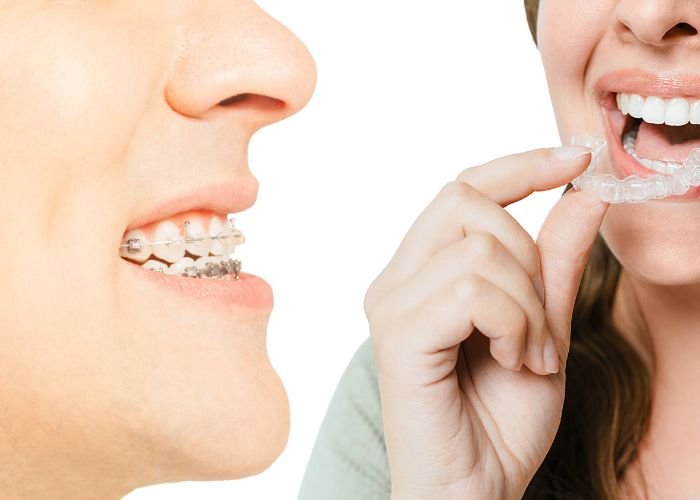
When deciding between braces vs aligners, here are a few final thoughts:
Choose braces if:
- You have sereve jaw misalignment
- Your teeth are severely rotated or impacted
- You’re unlikely to wear aligners consistently
Choose invisible aligners if:
- Your main concern is mild to moderate crowding or spacing
- You’re committed to wearing them 20+ hours a day
Remember, many orthodontists may recommend a combination of treatments, starting with braces and then finishing with aligners, especially for the most complex cases.
Final Thoughts
So, can aligners fix crooked teeth? The answer is yes, with the right guidance, discipline, and brand. With AI-driven technology, improved materials, and more accessible treatment plans, clear aligners are now capable of handling a wide range of teeth-straightening needs.
However, suppose your condition is very severe or involves jaw misalignment. In that case, it’s still worth consulting a certified orthodontist who can build a custom plan for you, possibly combining aligners with other tools.
Also Read: The Future of Teeth Straightening: Aligners vs. Braces vs. Retainers




Leave a Reply